
Influencer Marketing Statistics: Key Trends, Growth, and Insights for 2026
Influencer marketing has become one of the most important strategies in modern digital marketing. What started as brands collaborating with popular social media personalities has developed into a major industry involving creators of all sizes, from celebrities to niche content creators.
The latest influencer marketing statistics show that businesses are continuing to increase their investment in creator partnerships. Brands are using influencers not only to increase awareness but also to build trust, generate engagement, drive website traffic, and increase sales.
Understanding the latest influencer marketing statistics can provide valuable insights for marketers who want to understand consumer behavior, identify industry trends, and create more effective influencer campaigns.
What Is Influencer Marketing?
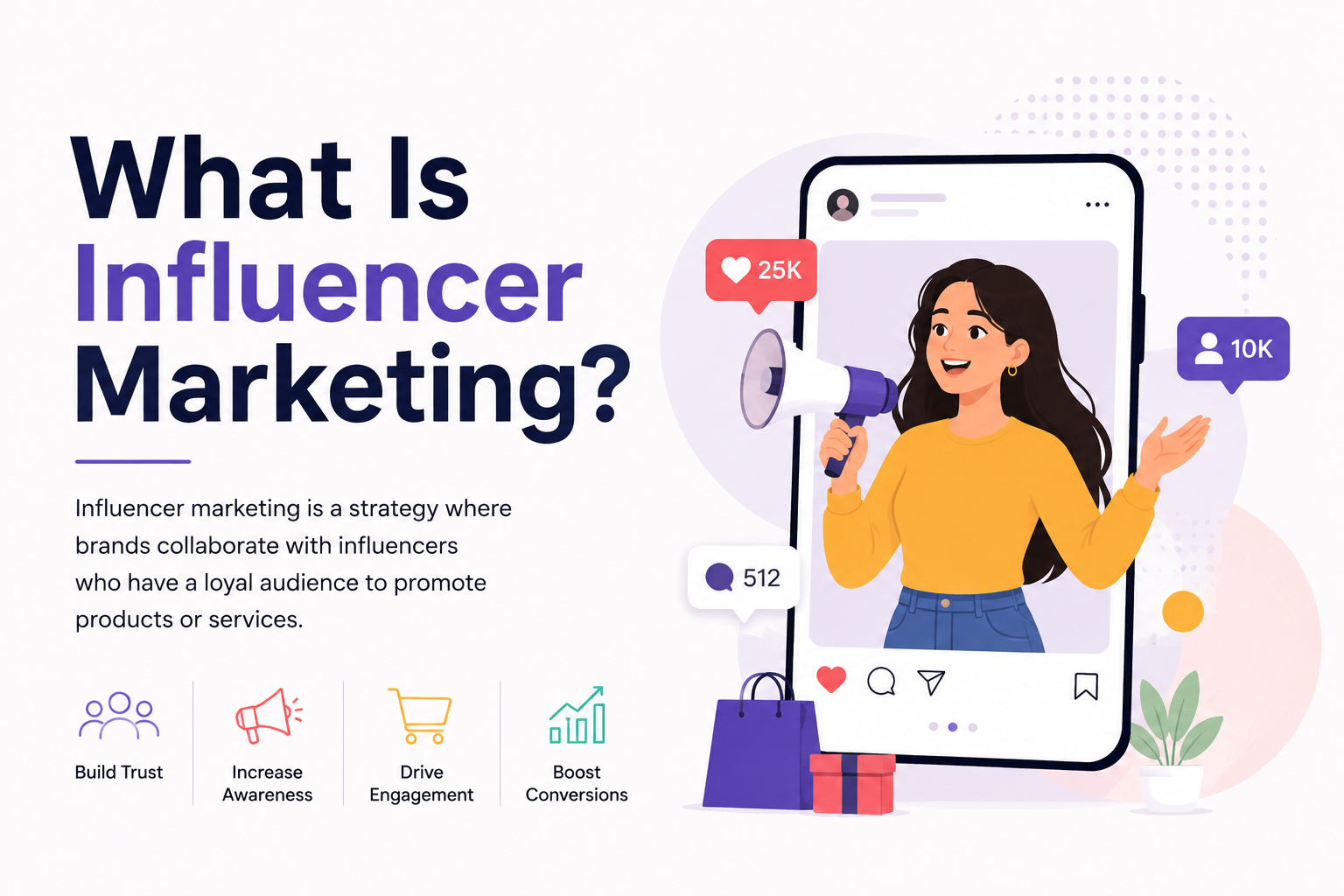
Influencer marketing is a digital marketing strategy where brands collaborate with individuals who have an established audience on platforms such as Instagram, YouTube, TikTok, and other social networks.
Influencers can affect their audience’s opinions, interests, and purchasing decisions because they have built relationships and credibility within specific communities.
For example, a fitness brand might collaborate with a fitness creator to promote workout equipment, clothing, or other relevant products. Instead of showing the product through a traditional advertisement, the creator can demonstrate how they use it in their everyday content.
This makes influencer marketing different from traditional advertising. The promotion is integrated into content that the audience already enjoys consuming.
Influencer Marketing Industry Growth
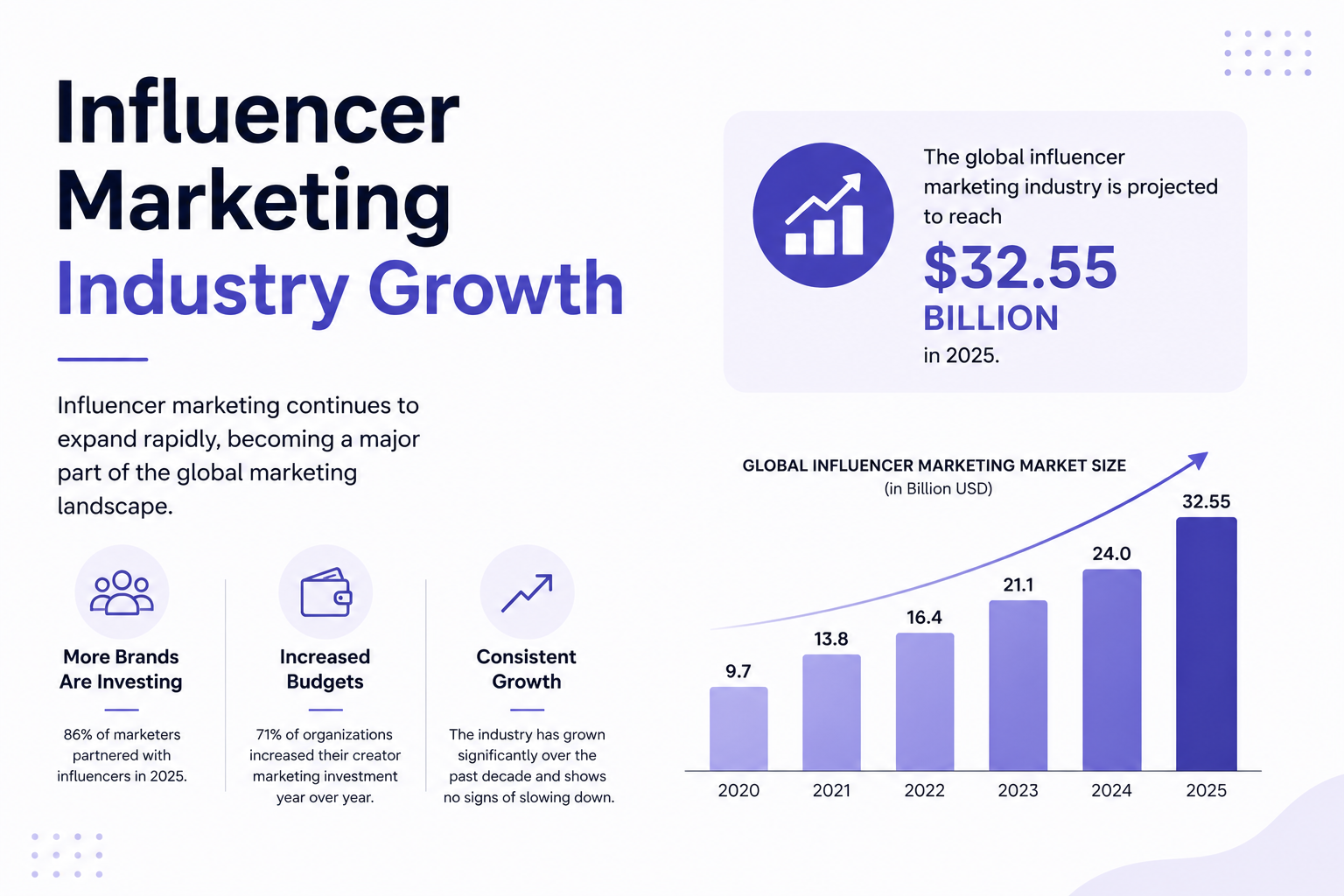
One of the most important influencer marketing statistics is the growth of the industry itself.
The global influencer marketing industry was projected to reach approximately $32.55 billion in 2025. This represents significant growth compared with previous years and demonstrates how important creator partnerships have become for brands.
These influencer marketing statistics highlight how rapidly influencer marketing has developed into a major part of the digital advertising ecosystem.
This growth has happened alongside the rapid expansion of social media. Platforms such as Instagram, YouTube, and TikTok have created opportunities for ordinary users to build large and highly engaged communities.
As social media usage has increased, brands have recognized that creators can provide something traditional advertising sometimes struggles to achieve: a direct connection with a specific audience.
Instead of targeting millions of people with the same advertisement, a brand can work with several creators who each have audiences interested in a particular topic.
More Brands Are Using Influencer Marketing
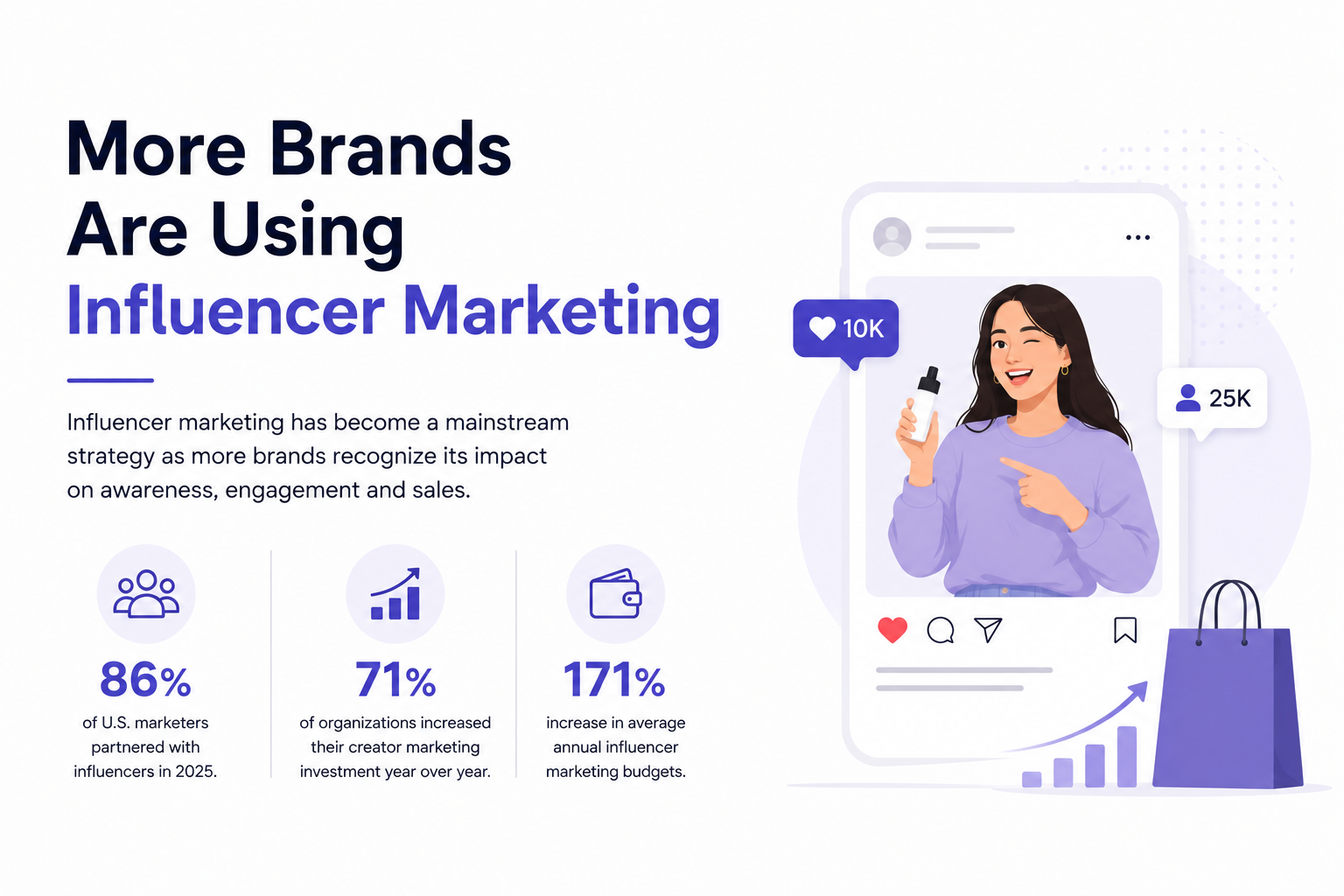
Another important trend highlighted by current influencer marketing statistics is the increasing number of businesses using influencer marketing.
According to Sprout Social, 86% of U.S. marketers partnered with influencers in 2025.
This demonstrates that influencer marketing is becoming a normal part of digital marketing strategies rather than simply an experimental approach.
CreatorIQ’s 2025–26 research also found that 71% of organizations increased their creator marketing investment year over year.
These influencer marketing statistics show that businesses are increasingly treating creator partnerships as an important part of their overall marketing strategy.
The reason behind this increased investment is relatively simple. Consumers spend a significant amount of time on social media, and creators already have access to these audiences.
Rather than building an audience from scratch, businesses can collaborate with creators who have already developed communities around particular interests.
The Rise of Micro-Influencers
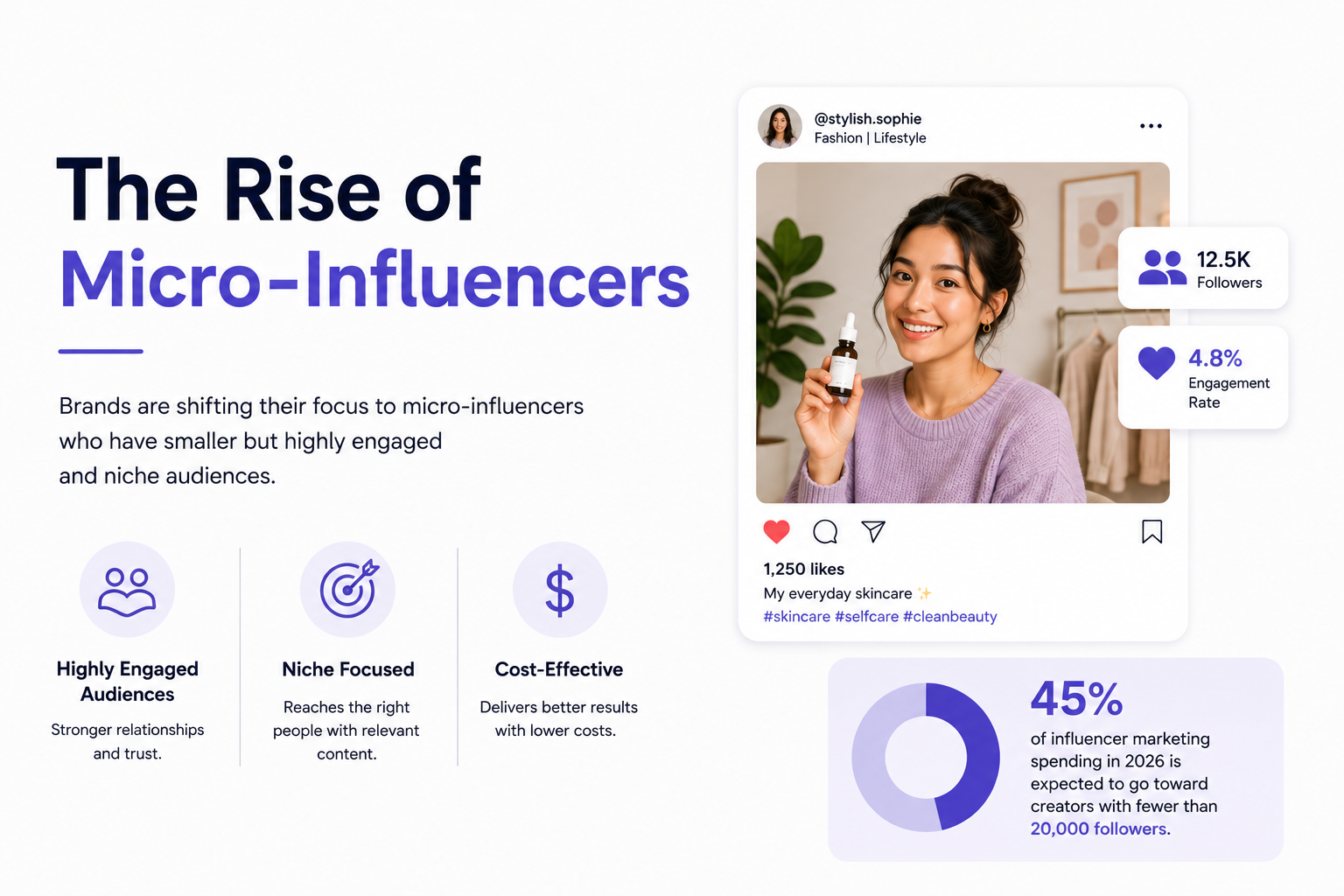
When people think about influencers, they often imagine celebrities with millions of followers. However, one of the biggest developments shown by influencer marketing statistics is the rise of micro-influencers and nano-influencers.
Micro-influencers generally have smaller audiences than celebrities but often focus on specific niches. These niches could include fitness, gaming, fashion, beauty, technology, food, travel, or education.
Their smaller audiences can sometimes create stronger relationships between the creator and their followers.
Recent industry research indicates that a significant share of influencer marketing spending is moving toward smaller creators. In the U.S., approximately 45% of influencer marketing spending in 2026 is expected to go toward creators with fewer than 20,000 followers.
This is one of the influencer marketing statistics that marketers should pay close attention to because it demonstrates the growing importance of smaller, niche creators.
This highlights an important lesson for marketers: having the largest following doesn’t automatically make someone the best influencer for a campaign.
A creator with 10,000 highly relevant followers may be more useful to a specialized brand than a celebrity with millions of followers who have little interest in the product.
Why Engagement Matters More Than Follower Count
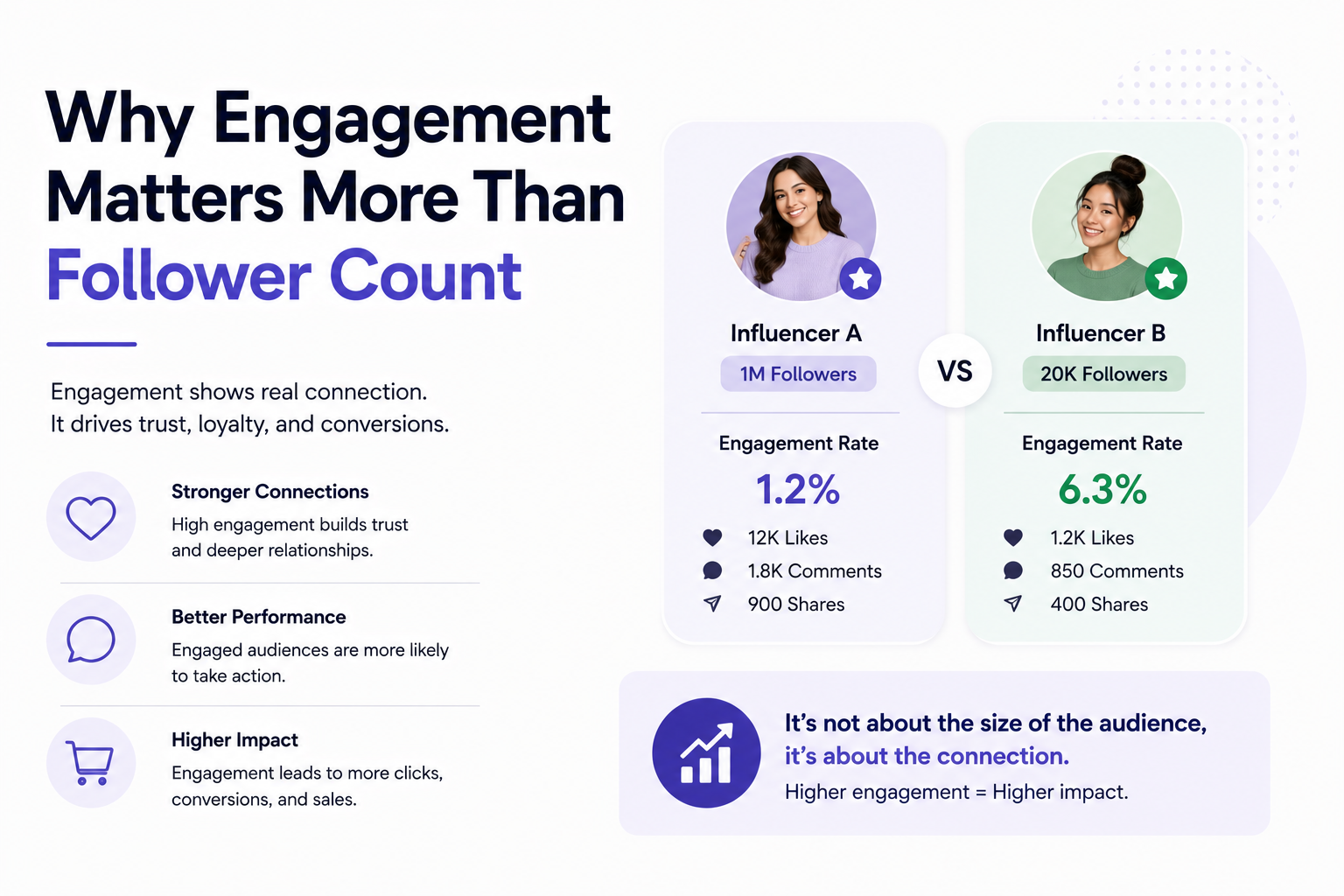
Follower count is one of the easiest influencer metrics to see, but it isn’t necessarily the most important.
Imagine two influencers.
The first has one million followers but receives relatively little interaction on their posts. The second has 20,000 followers but regularly receives comments, shares, and conversations from their audience.
For a niche campaign, the second creator could potentially be more valuable.
Recent influencer marketing statistics from Sprout Social found that only 17% of consumers check a creator’s follower count before deciding whether to engage. This suggests that audiences may care more about the relevance and quality of the creator’s content.
Marketers should therefore consider metrics such as:
- Engagement rate
- Comments and conversations
- Shares
- Saves
- Audience demographics
- Content quality
- Click-through rate
- Conversions
- Return on investment
Looking at these measurements alongside the latest influencer marketing statistics gives brands a better understanding of whether an influencer can actually contribute to their marketing goals.
Influencer Marketing in India
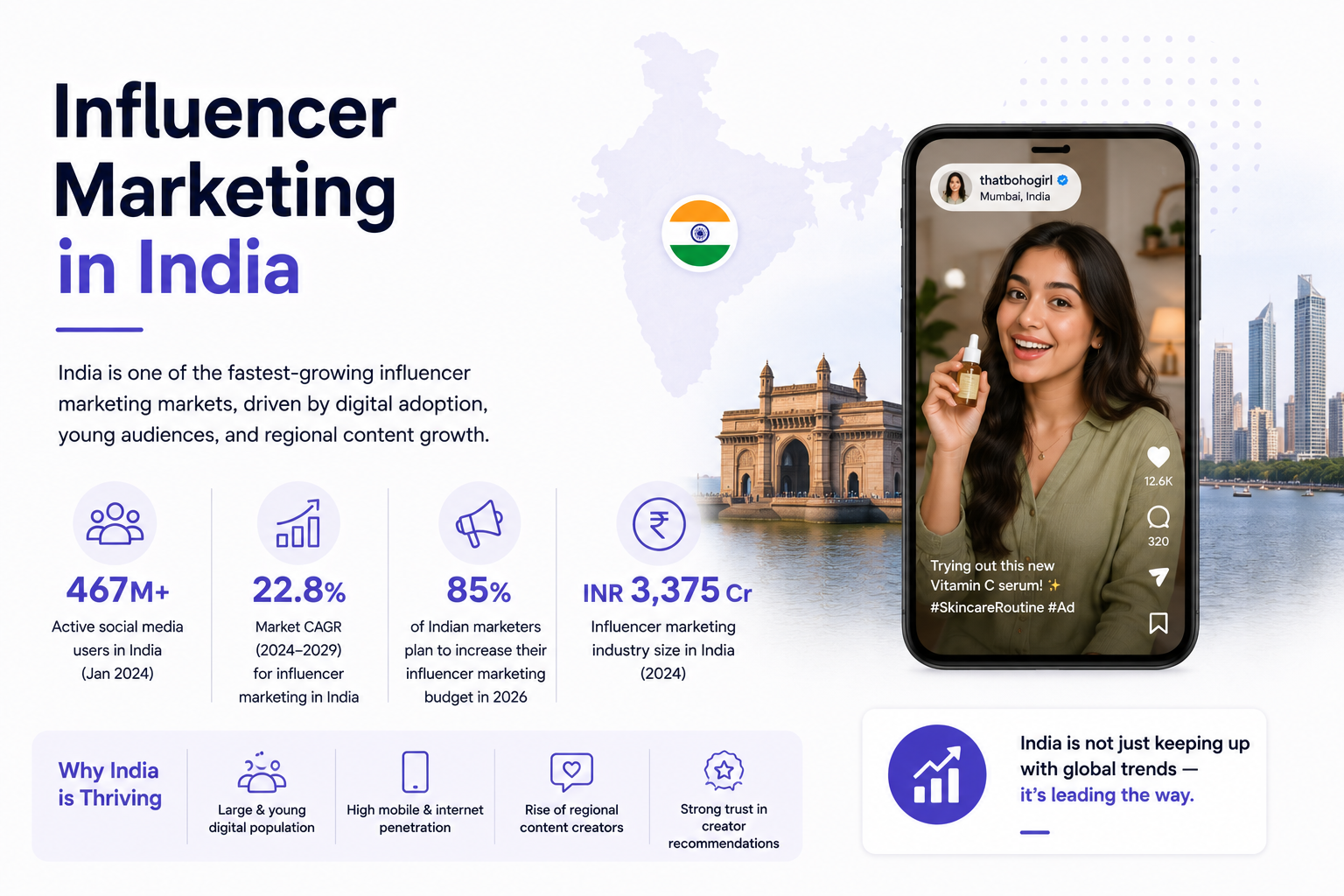
India has also become an important market for influencer marketing. The latest influencer marketing statistics from the Indian market show significant growth and increasing opportunities for brands and creators.
According to industry research, India’s influencer marketing market was approximately ₹3,600 crore in 2024 and was expected to grow by around 25% in 2025.
These influencer marketing statistics in India demonstrate the growing importance of creator-led marketing in one of the world’s largest social media markets.
The country’s large and diverse social media audience has created significant opportunities for brands and creators.
India is particularly interesting because influencers can connect with audiences through different languages, cultures, and regional interests.
For example, a brand could work with a Malayalam-speaking creator to reach audiences in Kerala or collaborate with Hindi-speaking creators to reach audiences across several northern and central Indian markets.
This regional approach can make influencer campaigns more relevant and personalized.
Why Consumers Trust Influencers
One reason influencer marketing works is the relationship between creators and their audiences.
Traditional advertisements are clearly designed to sell something. Influencer content, on the other hand, can feel more personal because it is presented by someone the audience already follows.
This relationship is an important factor when looking at influencer marketing statistics because audience trust and engagement can directly affect campaign performance.
A creator may demonstrate a product, share their experience with a service, or explain why they find a particular product useful.
However, authenticity is important.
If every piece of content from a creator becomes a paid advertisement, the audience may become less interested or less trusting.
This is why brands increasingly look for creators whose existing content naturally fits their products.
For example, a sportswear company working with a fitness creator makes sense because the creator’s audience is already interested in fitness.
Influencer Marketing and ROI
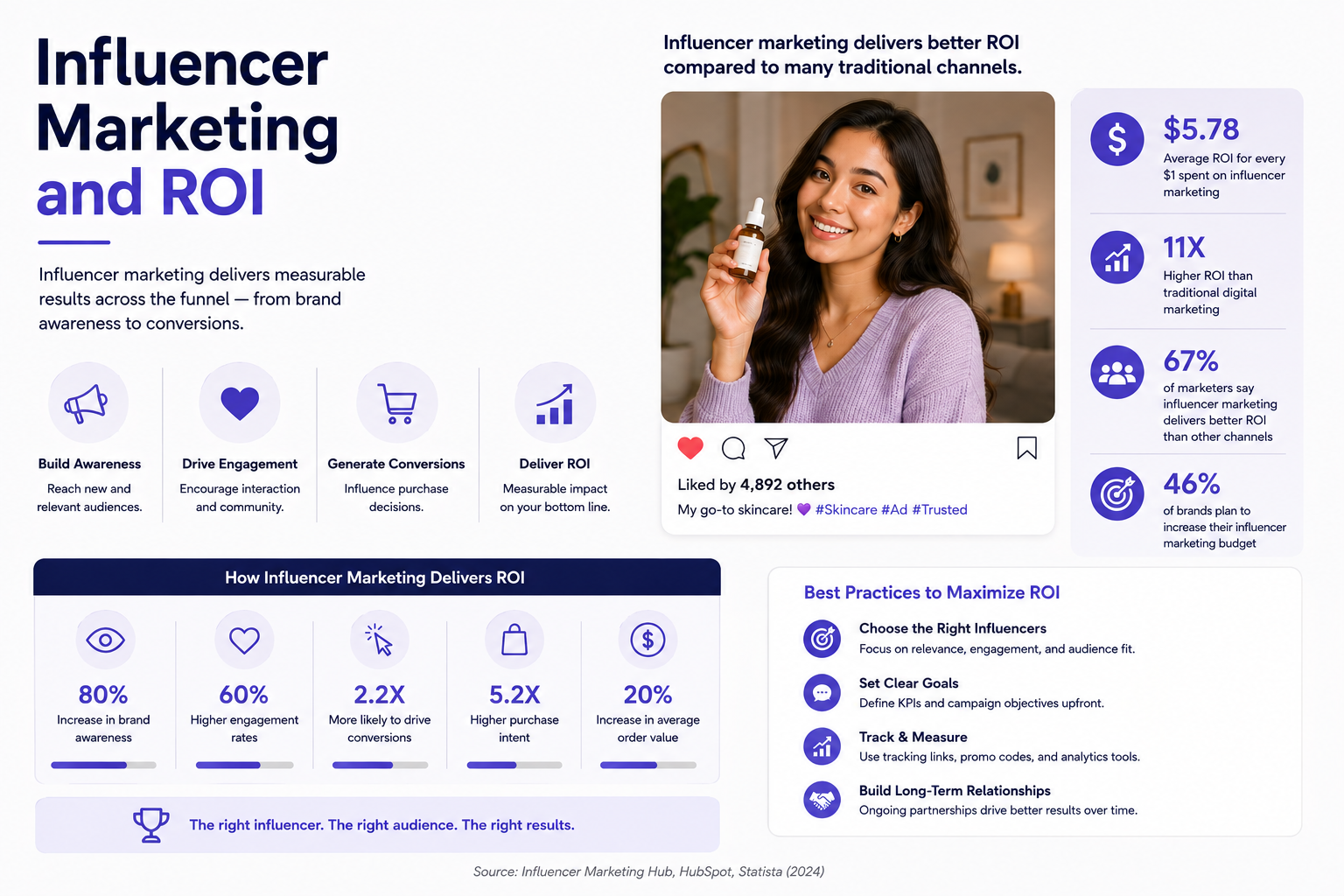
Return on investment, or ROI, is another important area of influencer marketing.
Many influencer marketing statistics focus on investment, engagement, and industry growth, but brands ultimately want measurable business results.
Brands don’t simply want likes and followers. They want results.
Depending on the campaign, these results could include:
- Increased brand awareness
- Website visits
- Product sales
- App downloads
- New followers
- Leads
- Sign-ups
- Engagement
- Customer conversions
Modern influencer marketing campaigns are becoming more data-driven. Brands can use tracking links, discount codes, affiliate links, and analytics platforms to determine which creators are generating results.
By combining campaign data with industry influencer marketing statistics, marketers can compare different campaigns and make better decisions about future investments.
Long-Term Influencer Partnerships
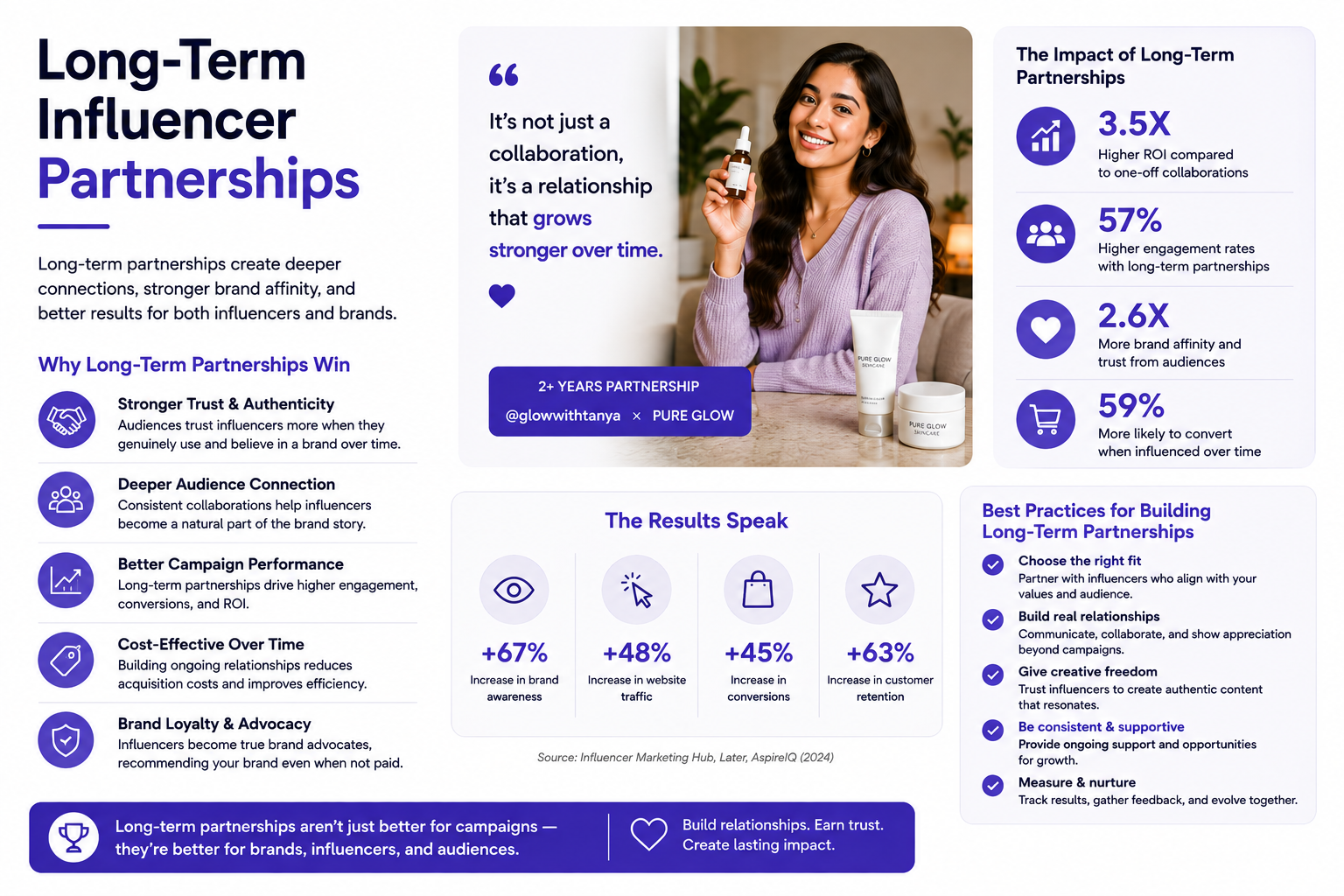
Another trend highlighted by influencer marketing statistics is the move from one-time collaborations toward long-term partnerships.
Instead of paying an influencer to create one sponsored post, a brand may work with the same creator for several months.
Long-term partnerships can be beneficial because the creator becomes more familiar with the brand and its products.
The audience also has more opportunities to see the brand through the creator’s content.
This can make the partnership feel more natural than a single advertisement.
For brands, long-term relationships can also make it easier to measure performance and develop consistent messaging.
The Role of AI in Influencer Marketing
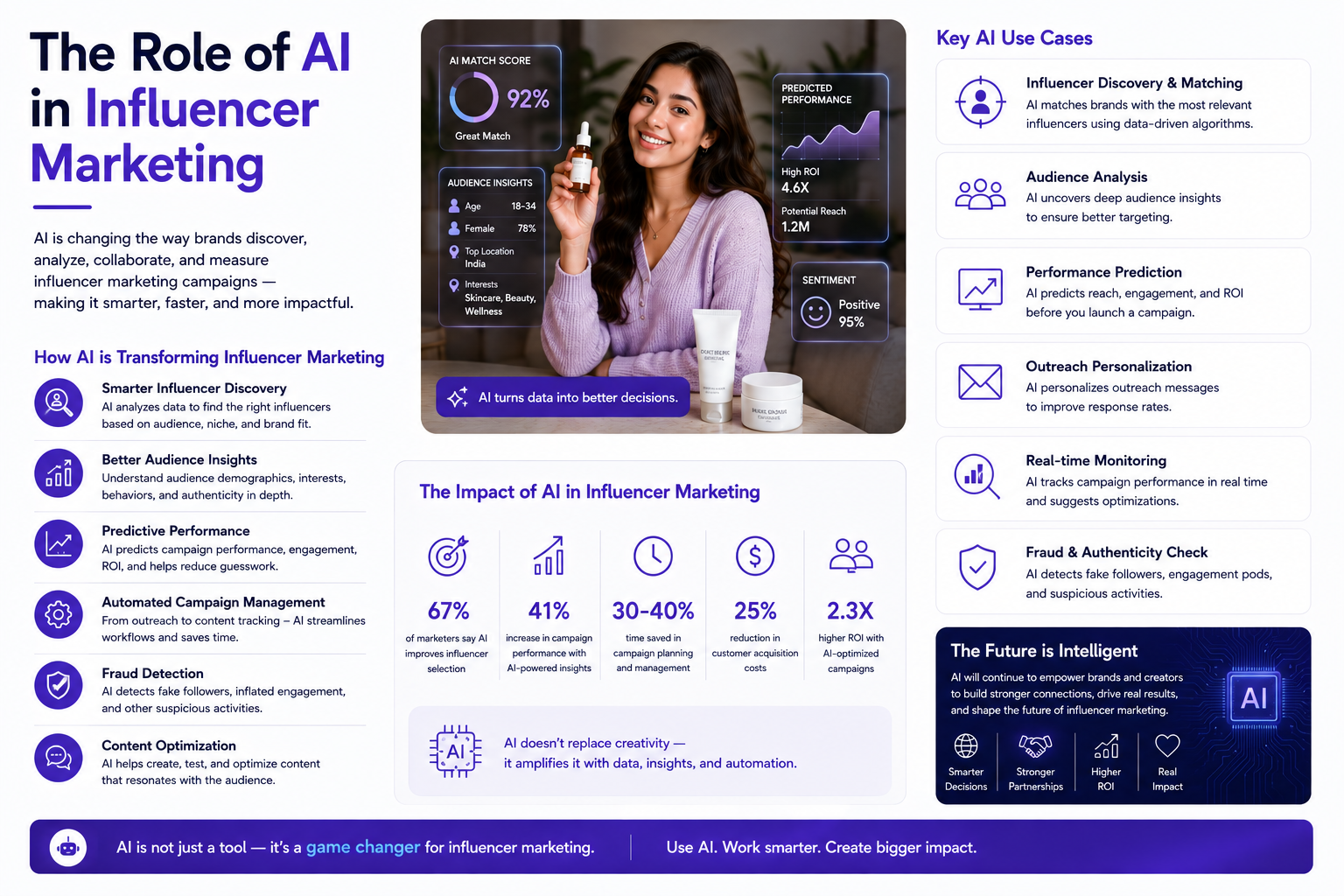
Artificial intelligence is also becoming increasingly relevant to influencer marketing.
AI tools can help marketers analyze creators, identify potential influencers, study audience data, generate content ideas, and measure campaign performance.
Creators themselves are also using AI for tasks such as brainstorming, editing, research, and content planning.
In India’s 2026 creator research, 59% of surveyed creators said they use AI tools regularly or sometimes in their workflows.
However, AI does not eliminate the importance of human creativity and authenticity.
Influencer marketing depends heavily on relationships between creators and audiences. Technology can make the process more efficient, but genuine content and audience trust remain important.
The Importance of Choosing the Right Influencer
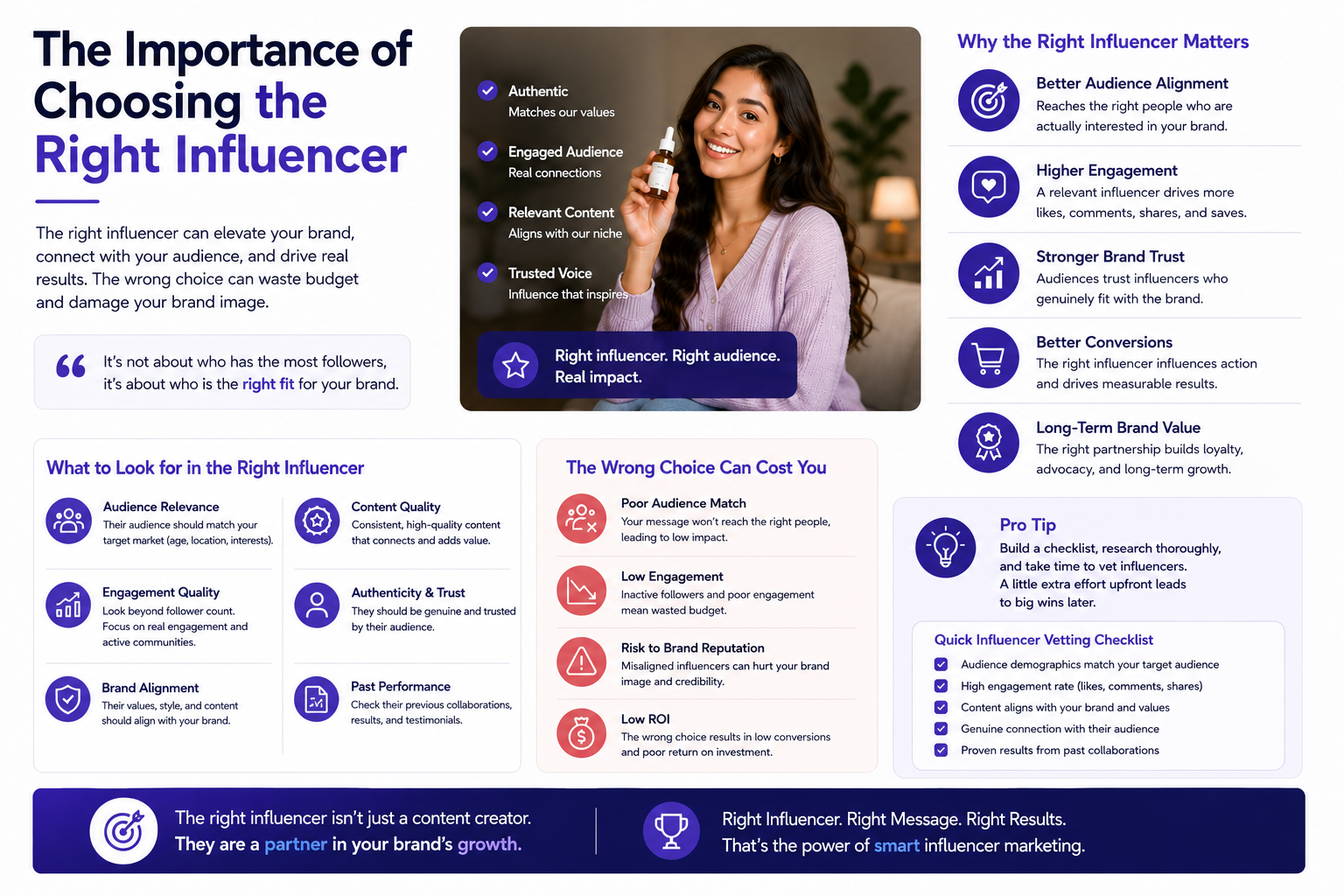
The latest influencer marketing statistics show that the industry is growing, but simply spending more money doesn’t guarantee success.
Choosing the right creator is one of the most important parts of a campaign.
Brands should consider:
Audience relevance: Does the creator’s audience match the brand’s target customers?
Content style: Does the creator produce content that fits the brand’s image?
Engagement: Does the audience actively interact with the creator?
Authenticity: Does the partnership feel natural?
Previous partnerships: Has the creator worked with similar brands?
Performance: Can the creator demonstrate results from previous campaigns?
These factors can help businesses avoid choosing influencers based only on their follower numbers.
Future of Influencer Marketing
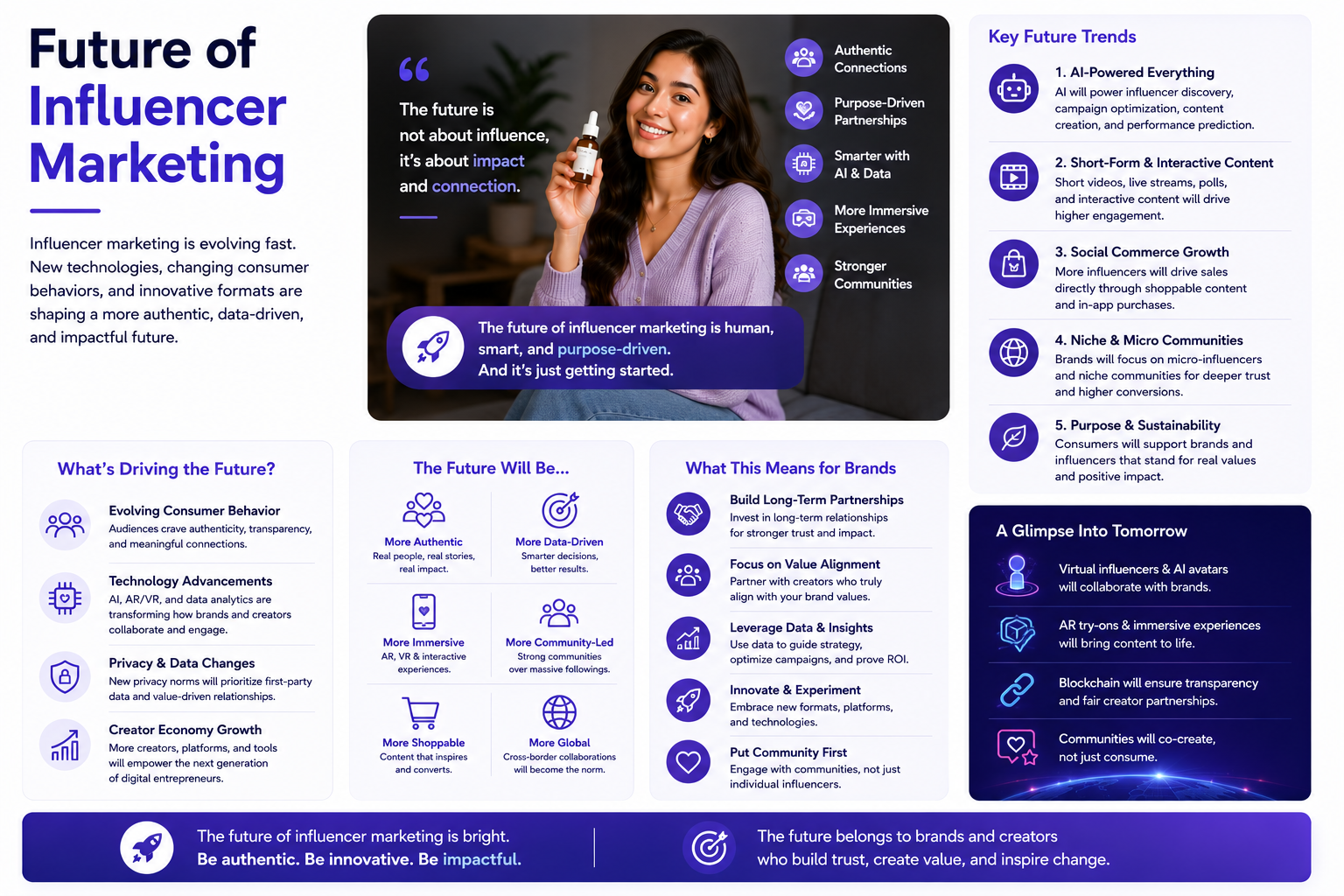
The future of influencer marketing appears to be increasingly focused on data, authenticity, niche communities, and long-term relationships.
The growth of smaller creators suggests that brands are becoming more interested in audience quality rather than simply audience size.
At the same time, improvements in analytics and AI will allow marketers to measure campaigns more accurately.
Social media platforms will also continue to influence the industry. As new platforms and content formats emerge, creators and brands will need to adapt their strategies.
Short-form video, livestreaming, community-based content, and personalized recommendations are likely to remain important parts of the creator economy.
Conclusion
The latest influencer marketing statistics demonstrate that influencer marketing has developed into a major part of the digital marketing industry.
The global market continues to grow, more brands are increasing their creator budgets, and micro-influencers are becoming increasingly important. India is also experiencing significant growth, creating opportunities for both brands and creators.
However, successful influencer marketing isn’t simply about finding someone with millions of followers. The most effective campaigns focus on relevance, engagement, authenticity, and measurable results.
For digital marketers, the biggest lesson is clear: the future of influencer marketing is not necessarily about reaching the biggest audience. It is about reaching the right audience through the right creator with the right message.
As social media continues to evolve, influencer marketing will likely remain an important tool for brands looking to connect with consumers in a more personal and engaging way.